Styling
How to Layer Gold Necklaces Without Overdoing It
An edited approach to necklace layers: balanced lengths, varied texture, and one considered focal point.
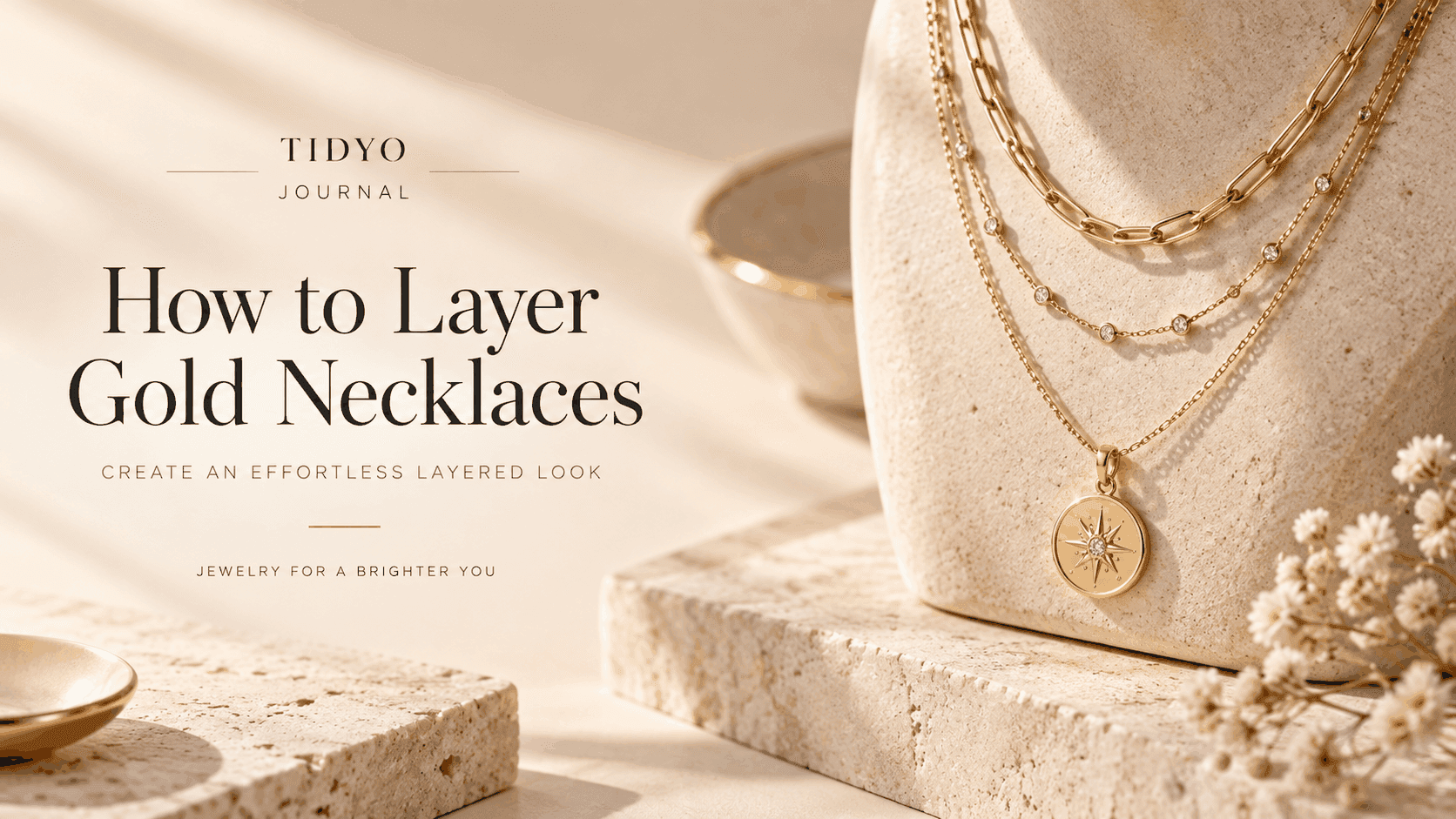
A good necklace layer looks collected rather than crowded. The pieces do not need to match, but they should have enough visual connection and physical space to read as one composition. Start with two necklaces, establish a clear focal point, and add a third only if the neckline and outfit can support it. Editing is what makes the result feel effortless.
Begin with the neckline
The open space created by a neckline is the frame for your necklace stack. A crew neck often works with chains that sit above the fabric or extend clearly below it. An open collar, scoop, or V-neck gives pendants room to fall at different points. With a high neckline, longer chains can create a clean vertical line over the fabric.
Before choosing individual pieces, decide how much of the stack will be visible. If a shirt collar interrupts the middle chain, simplify the layer or change the lengths. The aim is not to fill every inch of skin; it is to create deliberate intervals.
Use length to create structure
Begin with a short chain or subtle detail near the collarbone, then leave enough space for the next piece to remain distinct. Exact measurements depend on the wearer, clasp position, and pendant size, so treat standard necklace lengths as a starting point rather than a guarantee. Adjustable chains are useful because small changes can prevent pendants from overlapping.
A ready-made design such as the Golden Crescent Layered Necklace demonstrates the principle: separate lines create rhythm while a crescent provides a focal point. When assembling your own stack from the necklace collection, try the complete combination in a mirror and move naturally before deciding the spacing works.
Vary texture, not every element
Layers become more legible when chain textures differ slightly. Pair a fine cable chain with a smoother link, a delicate strand with a more substantial profile, or a plain chain with one small pendant. If every chain has the same weight and link pattern, they may visually merge. If every piece is highly detailed, they may compete.
The Rhythm Chain Necklace can provide a textural line in a stack, while a pendant introduces a clear resting point. Keep one shared quality, such as gold tone or a repeated rounded shape, so the contrast still feels coherent.
Choose one focal point
The easiest way to avoid overdoing a necklace stack is to let one piece lead. A medallion, pearl detail, sculptural pendant, or distinctive chain can become the anchor. Supporting chains should frame it rather than compete for attention.
For example, the Golden Medallion Necklace can sit as the lowest and strongest element, with one or two quieter chains above it. If the anchor includes pearls or stones, repeat that detail sparingly elsewhere in the outfit rather than adding another equally ornate pendant.
Two necklaces are often enough
A two-piece layer can feel more modern than a crowded stack. Pair one short chain with one pendant, or one delicate necklace with a broader link. This works particularly well with earrings or a neckline that already has detail. Three pieces can be beautiful, but each should have a role: short framing chain, middle transition, and lower focal point.
The Golden Pearl Layers Necklace offers another reference for balancing softness and shine. Pearls bring visual texture, so additional pieces should remain restrained. Let the pearl detail be the point rather than surrounding it with several competing motifs.
Keep metals and color intentional
Matching every gold tone is not mandatory. Slight variation can make a stack feel collected, especially when shapes or chain weights connect the pieces. If you prefer a uniform look, compare finishes in natural light before wearing them together. If mixing metals, repeat the secondary tone elsewhere, perhaps in a ring or watch, to make the contrast feel deliberate.
Clothing color matters too. Gold can feel graphic against black or deep green, soft against cream, and warm beside earthy neutrals. A simple top gives a detailed stack more room; a print or embellished neckline usually benefits from fewer chains.
Reduce tangling
- Choose clearly separated lengths rather than chains that end at nearly the same point.
- Mix chain weights so identical fine links are less likely to move together.
- Fasten each clasp carefully and check that pendants face forward before leaving.
- Store necklaces individually and fully untangled between wears.
Movement can still shift any layered arrangement, and occasional adjustment is normal. For a long day, test the stack at home first. Turn your head, add a jacket, and check how collars or bag straps interact with the chains.
The final edit
Once the layer feels complete, remove one piece and look again. If the composition becomes clearer, leave it out. The strongest stacks rely on spacing, proportion, and one memorable detail rather than quantity. Start with a favorite necklace, add one complementary line, and let the result remain personal.
Explore TIDYO necklaces to build an edited combination of chains, pendants, and pearl details for your own everyday rotation.