Stone Guide
Moissanite vs Diamond: What's the Difference?
A clear comparison of two distinct jewelry stones, from composition and light performance to care and personal priorities.
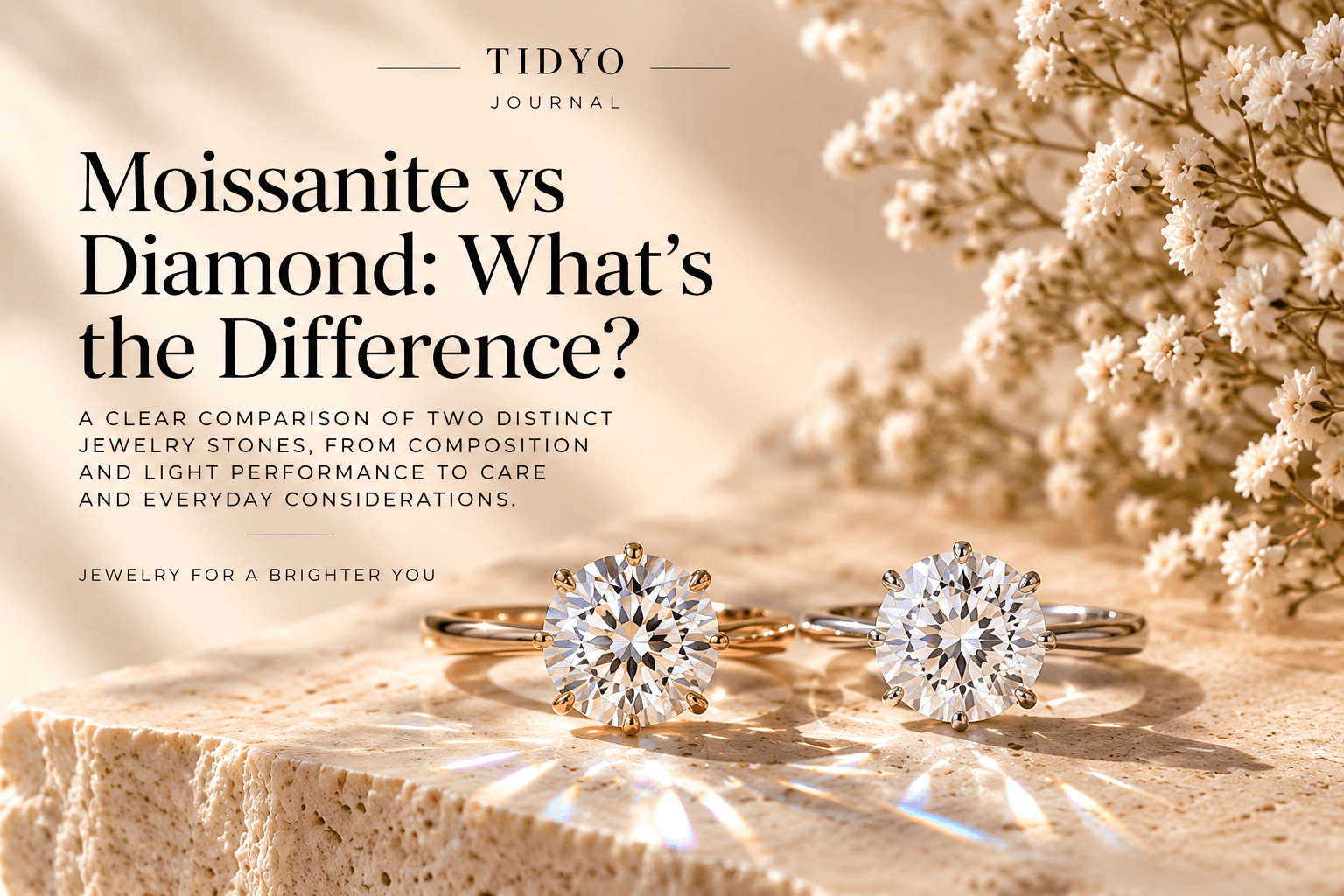
Moissanite and diamond can both create a bright, faceted focal point, but they are different materials with distinct optical character, origins and buying considerations. A useful comparison begins by treating each stone on its own terms rather than viewing one as a substitute name for the other.
What is moissanite?
Moissanite is silicon carbide. Naturally occurring material is exceptionally rare, so jewelry-quality moissanite is generally created in controlled laboratory conditions, then cut and polished for use in jewelry. It is known for strong brilliance and colorful flashes called fire. Our What Is Moissanite? guide explores the stone in more detail.
What is diamond?
Diamond is crystalline carbon. Diamonds used in jewelry may be mined or laboratory-grown, but their chemical composition differs from moissanite. Both stones can be transparent and highly reflective, yet composition, crystal structure and optical behavior remain distinct.
Appearance, brilliance and fire
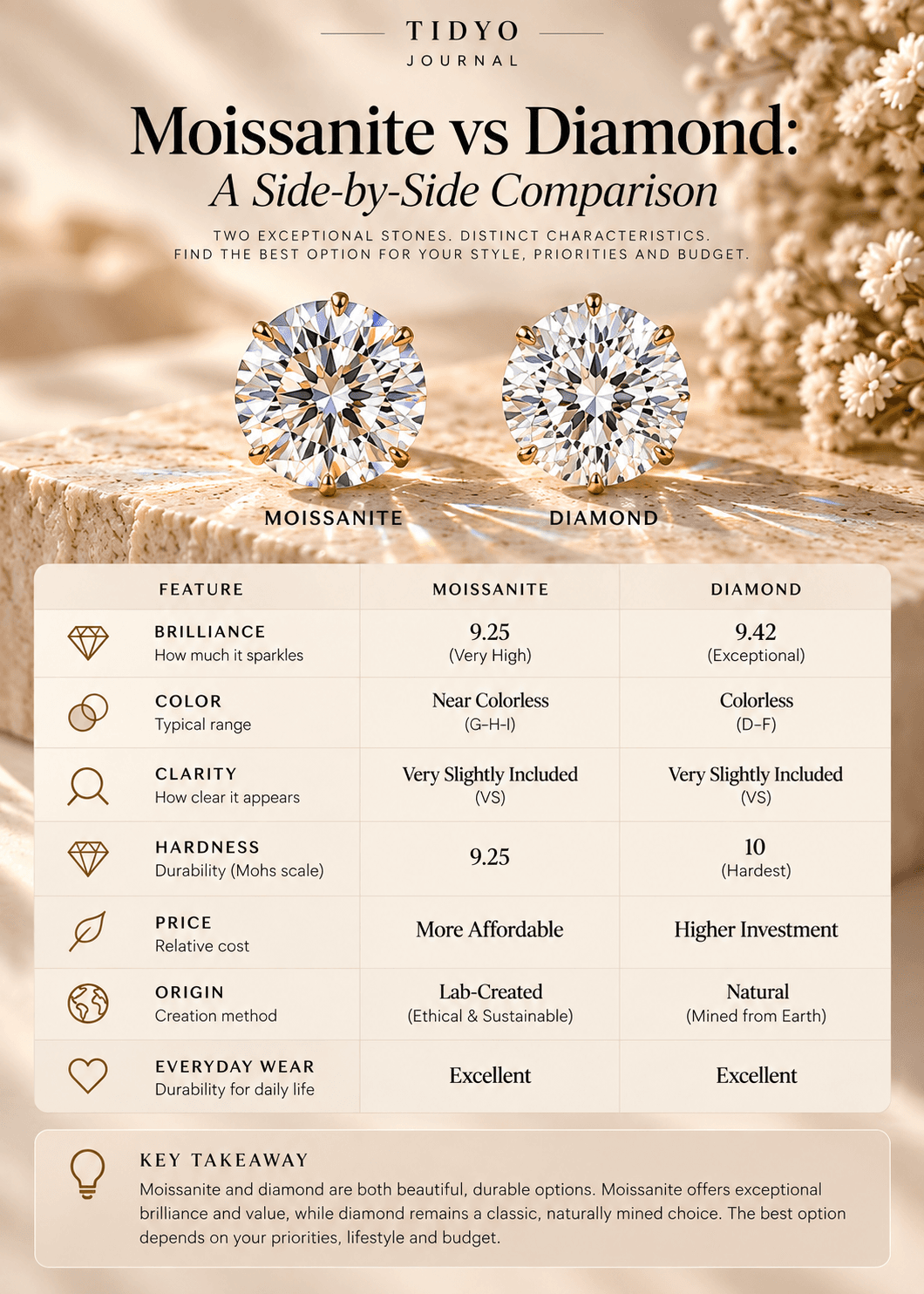
Brilliance describes white light returned from a cut stone; fire describes flashes of spectral color. Moissanite often displays vivid rainbow fire, especially in larger stones and direct light. Diamond typically presents a different balance of white brilliance, contrast and fire. Cut, shape, setting and lighting strongly affect either stone, so there is no single appearance shared by every example.
Color is another design consideration. Moissanite can appear colorless or be intentionally presented in distinctive colors, as seen across the TIDYO moissanite jewelry edit. Personal preference matters more than trying to make one material visually imitate the other.
Hardness and everyday durability
Both materials are considered hard enough for jewelry worn regularly. Diamond ranks higher in scratch resistance, while moissanite is also notably hard. Hardness does not make a finished ring indestructible: settings can bend, prongs can loosen and any stone can be affected by a forceful impact. The complete construction and the way a piece is worn matter alongside the stone.
Price and design considerations
Moissanite commonly occupies a different price range from comparable diamond jewelry, but a responsible comparison cannot be reduced to one percentage. Stone size and quality, metal, setting complexity, finish and overall design all affect price. Consider the complete piece and the visual result you value rather than comparing stone names alone.
Choosing according to your priorities
- Choose the light performance that genuinely appeals to you.
- Consider how stone shape, color and setting relate to your style.
- Review the verified material and care information for the complete piece.
- Think about profile and setting security for your daily routine.
For commitment jewelry, explore both the broader Engagement Rings edit and verified Moissanite Engagement Rings. The best choice is the one whose material, design and character align with your priorities.
Care considerations
Residue from lotion, soap and cosmetics can soften the appearance of any bright stone. Wipe jewelry gently after wear, avoid harsh household chemicals, store pieces separately and inspect settings periodically. Follow guidance for the metal and finish as well as the center stone.